Jurnal Online Fakultas Ekonomi dan Bisnis
Jl. Ahmad Yani 117, Surabaya
Journals
-

Management of Zakat and Waqf Journal (MAZAWA)
Original title : Management of Zakat and Waqf Journal English title : Management of Zakat and Waqf Journal Short title : MAZAWA Abbreviation : M-Zawaj Frequency : 2 issues per year (March and September) Number of articles per issue : 6 articles and reviews per issue DOI : 10.15642/mzw ISSN : 2685-7383 (Printed); 2746-3451 (Online) Editor-in-Chief : Basar Dikuraisyin (Scopus ID: 59304469400) Publisher : Universitas Islam Negeri Sunan Ampel Surabaya
St. Ahmad Yani 117 Surabaya, East Java 60237, IndonesiaLanguage : English Citation Analysis : Sinta, Google Scholar, Dimensions, Garuda Subject Area : Islamic Economy Category : Islamic Philantropy Discipline : Zakat and Waqf
MAZAWA Journal is a scientific journal that focuses on the science of zakat and waqf management. The journal is a forum for scholarly dialectics of scholars and professionals concerned with zakat and waqf affairs, both in terms of management, law, accounting, fiqh and contemporary developments. The journal aims to gain recognition as a leading journal for solving problems related to zakat and waqf.
MAZAWA Journal covers conceptual studies and field research on zakat and waqf management from various perspectives. This journal is published by Sunan Ampel Surabaya State Islamic University, published twice a year (every March and September), and each issue contains six articles in the field of zakat and waqf management. Therefore, in a year, this journal publishes twelve articles. The journal presents quality scholarly articles, which always place zakat and waqf management as the main focus of academic inquiry. It is a forum for debate for scholars and professionals concerned with management, law, accounting in challenging local and global contexts. The journal has become a forum for the dissemination and exchange of ideas and research findings, so that researchers, writers, and readers have interacted scientifically.
MAZAWA Journal was accredited in December 2021 in accordance with the Decree of the Directorate General of Higher Education, Research and Technology, Ministry of Education, Culture, Research and Technology of the Republic of Indonesia Number 164/E/KPT/2021. This journal has also become a member of crossref.org. therefore, each article has a unique DOI number.
-
Journal of Islamic Digital Economy and Business Studies
Journal Information
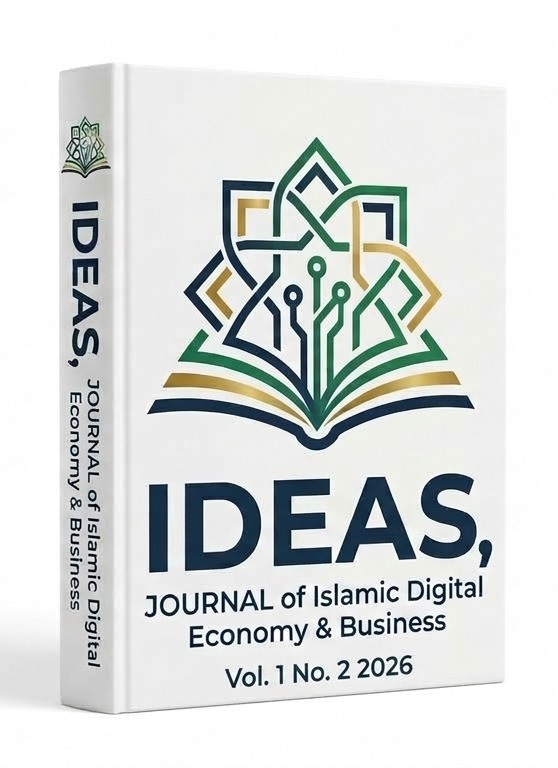
Original title : Journal of Islamic Digital Economy and Business Studies English title : Journal of Islamic Digital Economy and Business Studies Short title : IDEAS Abbreviation : IDEAS Frequency : 2 issues per year (June and December) Number of articles per issue : 7 research articles and reviews per issue DOI : ISSN : Editor-in-Chief : Ana Toni Roby Candra Yudha Managing Editor : Maziyah Mazza Basya Citation Analysis : Google Scholar Subject Area : Islamic Digital Economics and Business
Discipline : - Islamic FinTech
- Digital Finance
- AI in Islamic Finance
- Halal Digital Ecosystem
- Digital Entrepreneurship
- Digital business
- Digital Payment
- Blockchain
- Financial Inclusion
- Digital ZISWAF
- Halal Digital Business
Journal of Islamic Digital Economy and Business Studies
-
Peer Review: All submitted manuscripts undergo rigorous double-blind peer review, ensuring scholarly integrity, originality, and academic quality.
-
Language & Publication Distribution: Manuscripts may be submitted in Bahasa Indonesia or English. Accepted articles in Bahasa Indonesia will receive professional transliteration services into English for broader reach. Each issue typically publishes around 5-7 articles, with approximately 80% in English and 20% in Bahasa Indonesia.
-
Publication Schedule: Two issues are published per year—June and December.
-
Accreditation Status: The journal is currently in the process of applying for accreditation with the Ministry of Higher Education, Science, and Technology of the Republic of Indonesia (Kemenristekdikti).
Journal of Islamic Digital Economy and Business Studies is positioned as an interdisciplinary journal that bridges Islamic digital economics and business studies. Between theoretical knowledge and practical applications, promote interdisciplinary research, and contribute to the development of an inclusive, ethical, innovative, and sustainable global economy. IDEAS is committed to academic excellence, research integrity, and high standards of publication ethics.
-
As its primary subject area, the journal contributes to Islamic Economics and Business by publishing research These studies provide theoretical and empirical insights into how Islamic educational institutions actively shape local and regional economies.
-
As its secondary subject area, this journal focuses on the advancement of research, innovation, and practices in Islamic economics and business within the rapidly evolving digital ecosystem. Its scope encompasses a broad range of emerging topics, including Islamic FinTech, Digital Finance, Artificial Intelligence (AI) in Islamic Finance, Halal Digital Ecosystem, Digital Entrepreneurship, Digital Business, Digital Payment, Blockchain, Financial Inclusion, Digital ZISWAF, and Halal Digital Business. The journal welcomes multidisciplinary research integrating Islamic economic and financial perspectives with technological transformation, business innovation, and the sustainability of the halal ecosystem. Through theoretical, empirical, and applied approaches, the journal aims to provide an academic platform for advancing knowledge, fostering innovation, and developing solutions to address the challenges and opportunities of digital transformation in Islamic economics and business at both national and global levels.
The journal's distinctive identity lies in its integrative approach to connecting Islamic economic and business principles with emerging digital technologies and innovations. Unlike conventional journals focusing primarily on digital transformation or Islamic economics separately, this journal emphasizes the intersection of Islamic values, technological advancement, and sustainable business practices. Its unique contribution is to explore how innovations such as Islamic FinTech, artificial intelligence, blockchain, digital payments, and halal digital ecosystems can strengthen financial inclusion, promote ethical entrepreneurship, expand digital ZISWAF, and accelerate the development of an inclusive and sustainable Islamic digital economy. By bridging theoretical foundations, technological innovation, and practical applications, the journal seeks to establish a distinctive scholarly platform for advancing Islamic perspectives on the future of the global digital economy
-
Akuntansi: Jurnal Akuntansi Integratif
Journal Information
Journal Name : AKUNTANSI: Jurnal Akuntansi Integratif Journal Abbr. : AKUNTANSI ISSN : 2502-5376 (Print) | 2715-0658 (Online) DOI Prefix : 10.29080/jai Publication Frequency : Twice a year in April and October Accreditation : SINTA 3 Publisher : Accounting Study Program, Faculty of Islamic Economy and Business Affiliation : UIN Sunan Ampel Surabaya, Indonesia Editorial Office : Jl. Ahmad Yani 117, Surabaya, Indonesia Akuntansi: Jurnal Akuntansi Integratif (JAI) is a peer-reviewed academic journal published by the Accounting Department, Faculty of Islamic Economics and Business, State Islamic University of Sunan Ampel Surabaya, under the Dean’s Decree No: Un.08/1/PP.00.9/SK/05/IX/2015.
JAI is published twice a year, in April and October, with its first release in 2015. After a temporary publication pause, JAI was reactivated in April 2019 and continues to grow as a reputable medium for scientific communication and academic development in accounting.
Positioned as a forum for Indonesian and global accounting studies, JAI facilitates the dissemination of research findings, theoretical reviews, and interdisciplinary studies, encouraging constructive dialogue that enriches accounting knowledge and practices. The journal supports focused thematic discussions and scientific collaboration across diverse research methodologies and perspectives.
Through scholarly contributions, JAI aims to enhance academic quality, stimulate professional insight, and promote innovative thinking within the field of accounting and its supporting sciences.
-

Indonesian Journal for Entrepreneurial Review
The Indonesian Journal for Entrepreneurial Review (IJER) publishes information of empirical research and reviews in entrepreneurship, Creativity, and Innovation fields such as Model Business, Entrepreneurship, Business Risk Management, Fundamental E-Business, Ecosystem Business and Market, Consumer Behaviour issues and other community good practices in empowering their asset and potencies. The Indonesian word in the Indonesian Journal for Entrepreneurship Review (IJER) shows that journals are published in Indonesia and the scope of the research and source of articles are not only from Indonesia but are not limited (other countries).
-
El-Qist: Journal of Islamic Economics and Business (JIEB)
Journal Information
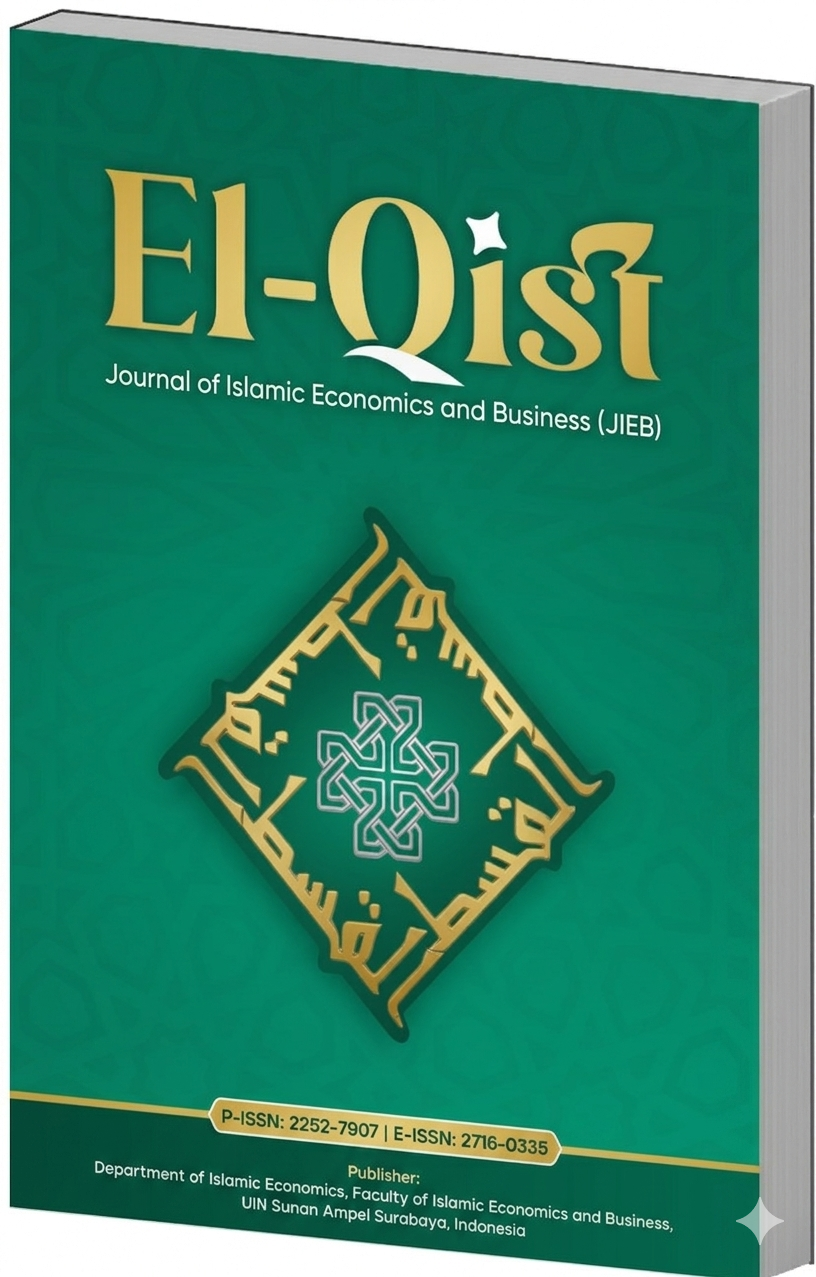
Original title : El-Qist: Journal of Islamic Economics and Business (JIEB) English title : El-Qist: Journal of Islamic Economics and Business (JIEB) Short title : El-Qist Abbreviation : JIEB Frequency : 2 issues per year (April and October) Number of articles per issue : 9 research articles and reviews per issue DOI : https://doi.org/10.15642/elqist ISSN : 2252-7907 (Printed); 2716-0335 (Online) Editor-in-Chief : Bakhrul Huda Managing Editor : Mochammad Andre Agustianto Citation Analysis : Science and Technology Index, Dimensions, ROAD, Google Scholar Subject Area : Arts and Humanities Discipline : Religious studies El-Qist: The Journal of Islamic Economics and Business (JIEB) is a peer-reviewed academic journal published biannually by the Islamic Economics Department, Faculty of Islamic Economics and Business, Sunan Ampel State Islamic University, Surabaya, Indonesia. The journal serves as an international scholarly platform for research on the legal, ethical, and institutional dimensions of religious studies of economic practice within diverse socio-economic contexts.
El-Qist focuses on studies that critically examine how Islamic legal principles (fiqh al-muʿāmalah), ethical norms, and Sharia-based governance frameworks are formulated, implemented, and evaluated within modern economic and business systems. The journal publishes original conceptual, empirical, and comparative research that integrates normative Islamic analysis with economic outcomes, regulatory perspectives, and social impact.
The journal welcomes interdisciplinary and methodologically sound contributions addressing areas such as Islamic finance and banking, Islamic social finance, halal governance, Sharia-compliant business practices, digital transformation and fintech, consumer behavior, and public policy from Islamic perspectives. While maintaining a global outlook, El-Qist recognizes Indonesia and the Global South as strategic contexts for advancing internationally relevant Islamic economic scholarship.
All submissions undergo a rigorous double-blind peer-review process and are evaluated by an editorial board with thematic and interdisciplinary expertise. El-Qist is accredited as a national scientific journal (Science and Technology Index/ Sinta 2) by the Ministry of Higher Education, Science, and Technology, Republic of Indonesia (SK Dirjen Riset dan Pengembangan Kemdikbudristek No. 10/C/C3/DT.05.00/2025). El-Qist journal accreditation certificate can be downloaded here.
-

Jurnal Manajemen dan Inovasi (MANOVA)
Journal Information
Original title : Jurnal Manajemen dan Inovasi (MANOVA) English title : Journal of Management and Innovation Short title : MANOVA Abbreviation : Jur.Man.In Frequency : Twice in Years on January and July Number of articles per issue : 8 research articles and reviews per issue DOI : 10.15642/manova P-ISSN : 2685-4716 (Print) E-ISSN : 2746-282X (Online) Editor-in-Chief : Muchammad Saifuddin Publisher : Management Department, Faculty of Economy and Islamic Business Citation Analysis : Sinta, Google Scholar, Dimensions, Garuda Subject Area : Social Science Discipline : Management
Jurnal Manajemen dan Inovasi (MANOVA) is published regularly twice a year, namely in January (manuscript submission deadline is in October) and July (manuscript submission deadline is in April).
The focus of the themes and topics of this journal are; Marketing Management, Financial Management, Human Resources Management, Strategic Management, Operational Management, Entrepreneurship and Supply Chain Management
MANOVA publishes empirical research, conceptual papers, in-depth literature reviews and tests of alternative methodologies and theories that have significant contributions to the knowledge of management. The journal strives to bridge the gap between academia and practice, hence it also publishes viewpoints from practitioners, case studies and research notes of emerging trends.
Starting from January 1, 2024, MANOVA has been redirected from https://jurnalfebi.uinsby.ac.id/index.php/MANOVA to https://jurnalfebi.uinsa.ac.id/index.php/MANOVA.
-

OECONOMICUS Journal of Economics
Journal title OECONOMICUS Journal of Economics Initials OECONOMICUS Abbreviation Oeconomicus. J. Econ. Frequency 2 issues per year (June & December) DOI prefix 10.15642/oje by Crossref Print ISSN 2548-6004 (printed), 2715-4882 (online) Editor-in-chief Dr. H. Akhmad Yunan Atho'illah, M.Si. Managing Editor Hapsari Wiji Utami, M.S.E Publisher Prodi Ilmu Ekonomi Fakultas Ekonomi dan Bisnis Islam Citation Analysis GARUDA | SINTA | Google Scholar Subject Area; Category Economics, Econometrics and Finance Discipline Social Sciences, Economic theory, Economics Science